






Introduction
As AI evolves from software intelligence to autonomous real-world systems, enterprises must rethink technology investments, governance, and scale. In an exclusive interview with BW Businessworld, Group Vice President and Head of APAC, Piyush Jha discusses how GlobalLogic is preparing organizations for the next phase of AI-driven enterprise transformation.
How is GlobalLogic preparing for the next wave of AI-led enterprise transformation?
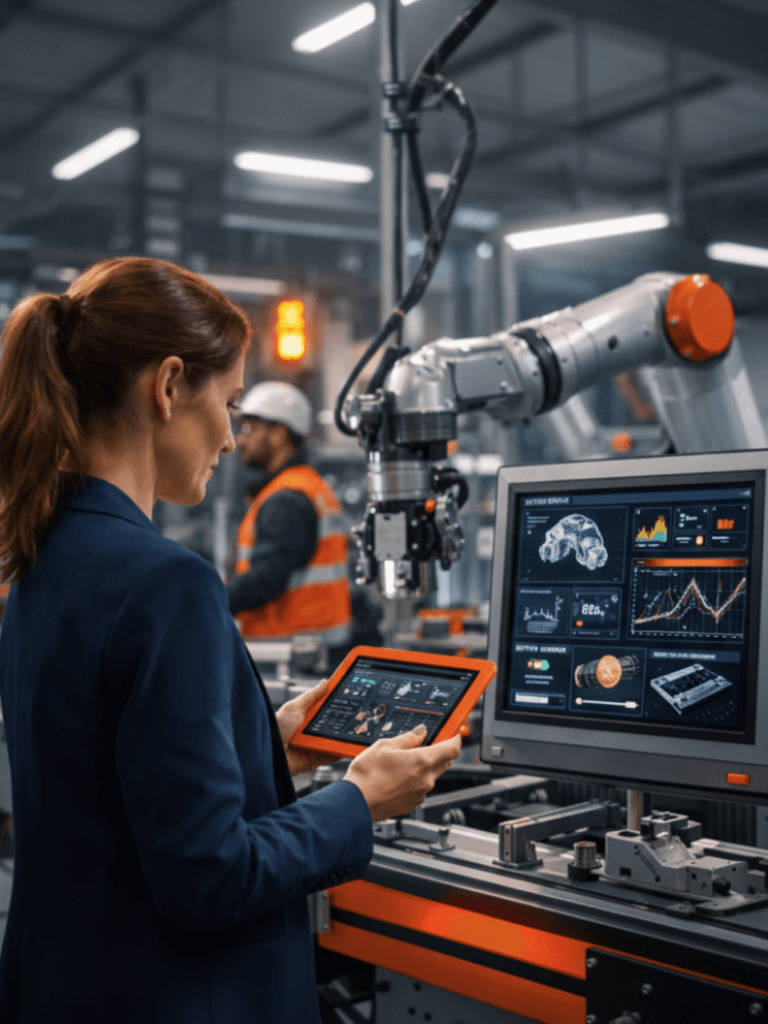
AI has moved well beyond experimentation and is rapidly becoming the foundation of modern enterprises. The journey has progressed from traditional AI-powered backend systems to generative AI, then agentic AI, and is now entering the era of Physical AI—where digital intelligence interacts with physical infrastructure to make autonomous decisions in real-world environments.
At GlobalLogic, the focus is on helping organizations transition from isolated pilots to production-grade AI deployments that deliver measurable business outcomes. The company is enabling AI adoption across software-defined vehicles, industrial systems, healthcare, smart infrastructure, embedded engineering, edge computing, and real-time AI.
This differentiation is driven by deep expertise in AI at scale. With more than 75 AI products, over 200 AI-enabled customer engagements, and nearly half of its business augmented by AI technologies, GlobalLogic is leveraging the VelocityAI platform, engineering expertise, and Hitachi’s industrial capabilities to support the next phase of enterprise AI transformation.
How does VelocityAI help enterprises move from AI experimentation to large-scale deployment?
Many organizations can build AI models, but scaling them reliably into production remains a challenge. VelocityAI is designed to bridge that gap by enabling enterprises to move from experimentation to deployment and optimization.
Built on a foundation of reusable assets and engineering best practices, the platform strengthens the integration of AI across the entire lifecycle—from ideation and development to deployment and optimization.
The combined strengths of GlobalLogic and Hitachi Digital Services create a full-stack ecosystem that helps enterprises move beyond pilots and deploy secure, scalable AI systems across both IT and operational technology (OT) environments.
VelocityAI enables organizations to embed AI directly into workflows while supporting governance, security, model monitoring, and risk management. It also reduces hallucination risks and ensures continuous optimization after AI systems go live.
How are regulated sectors balancing AI innovation with governance and compliance requirements?
Industries such as telecom, banking, financial services, and healthcare increasingly recognize that innovation and governance must go hand in hand.
Organizations are adopting a “responsible AI by design” approach, where compliance, auditability, and security are embedded throughout the AI lifecycle rather than added later.
As AI systems move into production, capabilities such as model traceability, explainability, human oversight, and compliance monitoring become critical. In highly regulated industries where AI often operates in sensitive and mission-critical environments, trust, resilience, and data governance are essential.
The next stage of AI adoption will be led by enterprises that can operationalize AI responsibly while maintaining transparency and regulatory compliance.
What challenges arise when deploying AI in physical environments?
Deploying AI in physical environments presents challenges beyond those found in purely digital systems.
Organizations must address:
- Low-latency processing requirements
- Limited edge computing resources
- Fragmented data sources
- Legacy operational technology environments
These factors demand greater reliability and uptime. The challenge is not simply creating AI models but ensuring they perform consistently and securely across distributed, mission-critical systems where AI is expected to make real-time decisions at the edge.
GlobalLogic addresses these challenges through a system-level IT-OT convergence approach by integrating Hitachi platforms such as HMAX and Lumada alongside its engineering capabilities, embedded AI expertise, enterprise software, and industrial AI systems to build resilient, production-ready architectures.
“The next stage of AI adoption will be led by enterprises that can operationalize AI responsibly and at scale while maintaining transparency and regulatory compliance.” — Piyush Jha
Which sectors in India are best positioned to benefit from Physical AI?
India offers significant opportunities for Physical AI because of its expanding infrastructure, rapid digitalization, and increasing convergence of software and industrial systems.
Key sectors include:
- Mobility: Connected and software-defined vehicles relying on AI for safety and real-time decision making.
- Manufacturing: Predictive maintenance, automation, and intelligent factory operations.
- Energy: Grid efficiency optimization and support for sustainable power systems.
- Healthcare: AI-driven diagnostics, medical devices, patient monitoring, and improved care delivery.
India’s engineering talent, large infrastructure base, and increasing investments in digital and industrial transformation position the country not only as a consumer of AI technologies but also as a global hub for developing and deploying real-world AI solutions.
Physical AI can also contribute significantly to the country’s vision of becoming a developed economy by improving productivity, infrastructure, and sustainable growth.
How will Physical AI reshape enterprise technology investments over the next five years?
Over the next three to five years, Physical AI is expected to drive a major shift in enterprise technology spending.
Rather than replacing existing assets, organizations will focus on modernizing machines, plants, and networks by embedding intelligence into them.
Investment priorities will include:
- Edge computing
- Digital twins
- AI-powered control systems
- Connected infrastructure
- Industrial IoT
- OT convergence
- Scalable AI platforms
- Robust governance frameworks
- AI-native talent
The enterprises that succeed will treat AI not as an additional technology layer but as a core capability woven into the fabric of their operations.
 How can I help you?
