- Services
- Industries
Published on February 12, 2026The 6G Revolution: Architecting the Internet of Everything
View all articles Ihor TolkushynSenior Manager, EngineeringShareRelated Content
 GlobalLogic24 March 2026
 GlobalLogic19 March 2026View All Insights
 GlobalLogic10 March 2026
Let's start engineering impact together
GlobalLogic provides unique experience and expertise at the intersection of data, design, and engineering.
Get in touch
As 5G continues its global rollout, the telecommunications industry is already looking toward the horizon: 6G. Expected to debut around 2030, 6G is not merely a faster version of its predecessor. It represents a fundamental shift in how we perceive connectivity.While 5G focused on connecting people and basic machines, 6G is being engineered to support the “Internet of Everything” (IoE) — a world in which the digital, physical, and biological realms integrate seamlessly.
6G acts as the ultimate catalyst for the IoE, removing the bottlenecks of latency, power, and capacity that currently limit our “smart” world.
From Connectivity to Deep Intelligence
One of the most significant shifts in 6G is the transition from connected intelligence to native AI. In the 5G era, AI is typically an external service: data is collected by an IoT device, sent to the cloud, processed, and sent back. This creates a bottleneck of time and energy.
In the 6G ecosystem, Artificial Intelligence will be baked into the network fabric itself to enable Agentic IoT, where devices can perform complex reasoning and autonomous decision-making locally. Whether it is a swarm of agricultural drones coordinating to pollinate a field or a smart grid balancing energy loads in microseconds, 6G will allow IoT systems to think and act without waiting for a distant server’s permission.
Sensing as a Service: The Network with “Eyes”
Perhaps the most “sci-fi” advancement of 6G is Integrated Sensing and Communication (ISAC). Currently, IoT devices rely on physical hardware — cameras, motion sensors, or lidars — to perceive their surroundings. 6G utilizes high-frequency terahertz (THz) waves, which behave like high-resolution radar.
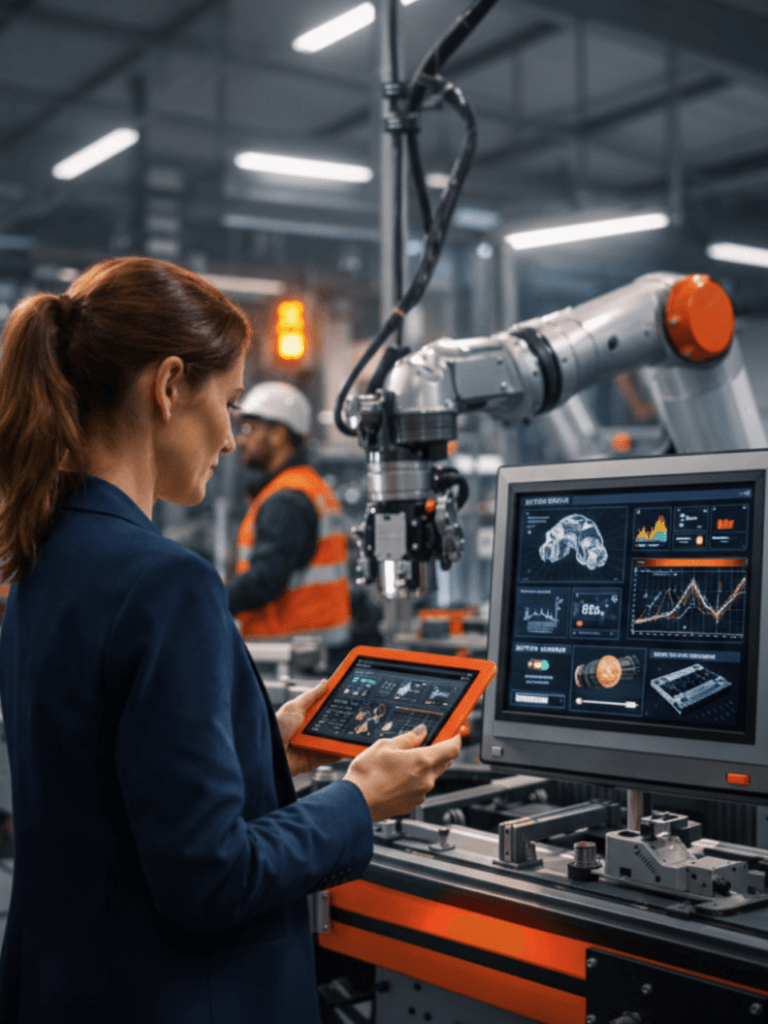
This allows the network itself to “sense” the environment. A 6G-enabled smart factory wouldn’t necessarily need a thousand cameras to track safety; the wireless signals reflecting off workers and machinery would allow the network to “see” a 3D map of the floor in real-time. In doing so, it eliminates the need for expensive, battery-draining sensors on every single object, drastically lowering the barrier to entry for massive IoT deployments.
Solving the Power Crisis: Zero-Energy IoT
The battery is the “Achilles’ heel” of the current IoT landscape. Managing billions of devices means replacing billions of batteries, a logistical and environmental nightmare. 6G aims to solve this through extreme energy efficiency and ambient backscatter communication.
Researchers are designing 6G to support “Zero-Energy” or “battery-free” devices. These sensors can harvest energy — such as light, heat, or even the 6G radio waves themselves — from the environment.
When combined with 6G’s 100x improvement in energy efficiency per bit, we move toward a future where sensors can be embedded in concrete bridges or human clothing, and remain functional for decades without a single charge.
Global Ubiquity: No More Dead Zones
5G is largely an urban phenomenon, struggling to penetrate deep rural areas or open oceans. 6G solves this through Space-Air-Ground-Sea Integration. By integrating terrestrial towers with Low Earth Orbit (LEO) satellites and high-altitude platforms (drones), 6G will provide 100% global coverage.
This is transformative for IoT, as it enables:
- Maritime IoT: Real-time tracking of every shipping container across the mid-Atlantic.
- Environmental IoT: Sensors monitoring deforestation or wildlife in the heart of the Amazon.
- Remote Healthcare: Wearable medical IoT that works even in the most isolated mountain villages, potentially saving lives via remote surgical intervention powered by 6G’s sub-millisecond latency.
Digital Twins and the Metaverse
6G provides the massive bandwidth (up to 1 TBps) required to maintain “Digital Twins,” live, perfect virtual replicas of physical objects or cities. In an industrial setting, every valve, motor, and gear in a factory will have a digital twin synced via 6G.
Engineers can “walk” through a virtual version of the factory using VR, seeing real-time data overlays from IoT sensors to predict a machine failure before it actually happens. This level of synchronization is impossible with 5G’s current capacity.
Recommended reading: Hitachi develops “Metaverse Platform for Nuclear Power Plants” to enhance efficiency in construction and maintenance operations
Empowering the Next Wave of Connectivity and IoT Innovation
As industries prepare for a 6G-enabled future, the challenge isn’t just technical — it’s about turning possibility into proven, scalable systems. It’s about distributed intelligence, autonomous operations, and connected systems that span digital and physical environments. Enterprises need partners who can help them navigate evolving standards, design resilient architectures, and bring intelligent connectivity to life.
That’s where GlobalLogic comes in, with decades of experience building the wireless foundations of modern connectivity, and a forward-looking approach to engineering 6G-native, AI-powered ecosystems.
Built for Scale
From 4G LTE optimization to deploying cloud-native 5G cores and Open RAN architectures, we’ve helped leading telecom vendors and enterprises evolve their networks for performance and agility — and launched 50M+ connected devices across healthcare, mobility, and industrial sectors.
Designed for Intelligence at the Edge
Our experience in embedded systems, Edge AI, and real-time analytics enables clients to bridge IT and OT, creating Physical AI ecosystems that sense, decide, and act autonomously, from factory floors to smart city infrastructure.
Governed by Design
With VelocityAI, GlobalLogic’s enterprise framework for AI-enabled transformation, we help enterprises build governed, interoperable ecosystems that can thrive in 6G environments. And through Method, our in-house design studio, we ensure complex systems stay intuitive and human-centric.
Accelerated to Market
With reusable reference architectures and domain accelerators, we help clients cut design cycles by up to 40% and move from PoC to production at speed — with reliability, governance, and safety built in.
GlobalLogic helps innovators move from concept to deployment — and from infrastructure to impact.
The 6G future won’t be defined by speed alone, but by how intelligently we use it.
As the boundaries between digital and physical systems dissolve, 6G becomes more than a network upgrade. It’s the foundation for embedded intelligence at scale, enabling resilient infrastructure, autonomous machines, and real-time collaboration across the planet.
Organizations that want to lead in this era must think beyond connectivity. They’ll need to engineer systems that are not only fast, but aware, adaptive, and accountable — systems that turn data into action without compromising trust or human oversight.
That’s the transformation GlobalLogic helps enable: not just building technology for 6G, but helping clients design for autonomy, govern complexity, and scale with confidence. The shift is already underway — and those who start now will shape what the Internet of Everything becomes.
You might also like:
- AI-Native Networks: Engineering the Future of Intelligent Telecom
- The 10/10/10 Rule for Ambitious Communications & Network Providers
- From Modernization to Reinvention: Agentic AI for the Intelligent Enterprise
Sources:
- 6G Technology: The New Connectivity Revolution That Will Transform Business in 2030 – Computrade Technology outlines how 6G will deliver ultra-low latency, AI-native infrastructure, and new automation layers across industries.
- 6G Wireless Systems: Vision, Requirements, Challenges, Insights, and Opportunities – This peer-reviewed paper from the National Library of Medicine explores 6G architecture, design considerations, and its convergence with AI, blockchain, and ubiquitous computing.
- Integration and Impact of 6G Technology on IoT Devices – ResearchGate analysis on how 6G will transform IoT scalability, with enhanced reliability, throughput, and real-time responsiveness.
- Top 10 Challenges for 6G – IPLOOK outlines the major technical and systemic hurdles facing 6G rollout, including spectrum access, energy demands, and AI-driven orchestration.
- From 5G to 6G: How Wireless Networks Will Transform by 2030 – PragetX highlights the roadmap from 5G to 6G, emphasizing advances in smart mobility, machine-type communications, and dynamic spectrum use.
- How 6G Technology Will Enhance IoT Applications – Taoglas discusses 6G’s role in advancing IoT use cases such as remote diagnostics, industrial automation, and connected transportation.
 How can I help you?
- Industries