
From Pipeline Resilience to Talent Readiness








Let's start engineering impact together
GlobalLogic provides unique experience and expertise at the intersection of data, design, and engineering.
Get in touch
A resilient pipeline answers one question: “Can we access talent when we need it?”
A talent readiness system asks a bigger question: “Can we build, move, and prepare talent fast enough for where the business is going?”
This is where hiring, learning, internal mobility, workforce planning, and AI must come together. In an AI-native world, talent is not only acquired. It is continuously developed, activated, and redeployed.
Talent Transformation as the Readiness Engine
Most companies have already said “yes” to AI. The real question now is whether their workforce can operate as AI‑native—where AI is woven into products, platforms, delivery, and day‑to‑day work, not bolted on as an afterthought.
This is exactly the ambition: combining AI, engineering, and talent to “engineer impact” for clients while building an AI‑first culture internally. As skills expire faster and talent shortages grow, this is only possible when talent transformation, learning in the flow of work (LiFOW), and a human‑centered approach to AI become the default operating system.

From Training Events to Capability Engines
The traditional starting point: “What’s on the training calendar?”
The ideal starting point should be: “What capability does the business need next, and how fast can we build it?”
Classic training models, classrooms, annual calendars, and big launches were built for a classic world. In an AI‑native world, where client expectations and tech stacks shift continuously and rapidly, that approach is too slow and too disconnected from real delivery.
GlobalLogic’s answer to this is Talent Powered by AI and GLX, its AI‑enabled learning experience platform. Instead of asking, “What course can we run?” the focus shifts to
- Capabilities, not just roles: what the workforce must be able to do for emerging technologies and industries, not only today’s projects.
- One skills map, aligning business, talent, and L&D to the same priority skills, with demand sensing and skills analysis built in.
- Internal mobility as a strategic supply channel: Treat existing employees as future capability pools that can be reskilled, redeployed, and grown into emerging demand.
- Continuous change, small, ongoing shifts in skills and roles, not occasional restructures.
For any enterprise, a learning platform like this sits at the center of its readiness engine, with curated learning paths, academies, and AI‑personalized journeys that help engineers and leaders build the capabilities the business will need next.
LiFOW: Where Transformation Actually Sticks
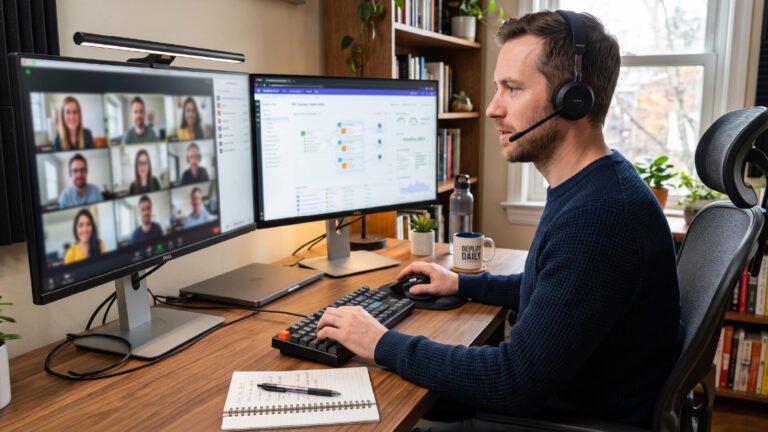
Learning in the flow of work is where talent readiness becomes real. It brings development into the tools, projects, and moments where work already happens. Instead of dragging people out of projects, LiFOW brings just enough learning into the tools and moments where work already happens.
Research shows that Gen Z expects learning to be on‑demand, mobile‑first, personalized, and tightly linked to new technologies and career moves.
LIFOW delivers on-demand learning interventions, integrated content, and real-time feedback within the flow of work. Learning becomes central to delivering business impact, rather than remaining a standalone program. It enables:
- Everyday tasks turn into micro‑learning moments, boosting performance rather than interrupting it.
- Microlearning for urgent problems pairs with deeper academies and simulations for new capabilities.
- Shaping learning journeys, nudging at the right time, tailoring content, and adapting to role and performance data.
The Next Shift: Talent as an Operating System
When skills data, learning journeys, mobility, hiring, and workforce planning are connected, talent becomes more than a function. It becomes an operating system for business readiness. AI can help map skills, identify adjacent capabilities, propose internal moves, simulate reskill-versus-hire scenarios, and reduce friction in employee support. But the goal is not automation for its own sake. The goal is better decisions, faster readiness, and more human-centered growth.
The future of talent will not be defined by how quickly companies react to demand but by how intelligently they prepare for it.
Resilient pipelines still matter, but they are only one part of the answer. The real advantage will come from always-on talent readiness—combining demand sensing, internal mobility, personalized learning, AI-driven insight, and human judgment.
In an AI-native world, companies will not win by simply filling roles faster. They will win by building the capabilities their clients, people, and business will need next.
You might also like:
 How can I help you?
