


Digital Twin


B
What is a Digital Twin?
A Digital Twin is a virtual model, or replica, of a physical object, person, or process that is based on data collected in real-time by using connected sensors to simulate real-world properties. A digital twin allows users to observe, analyze, test, validate, and optimize virtual replicas of the real-world, offering instant live insights to activities, environments, or conditions.
How does a Digital Twin work?
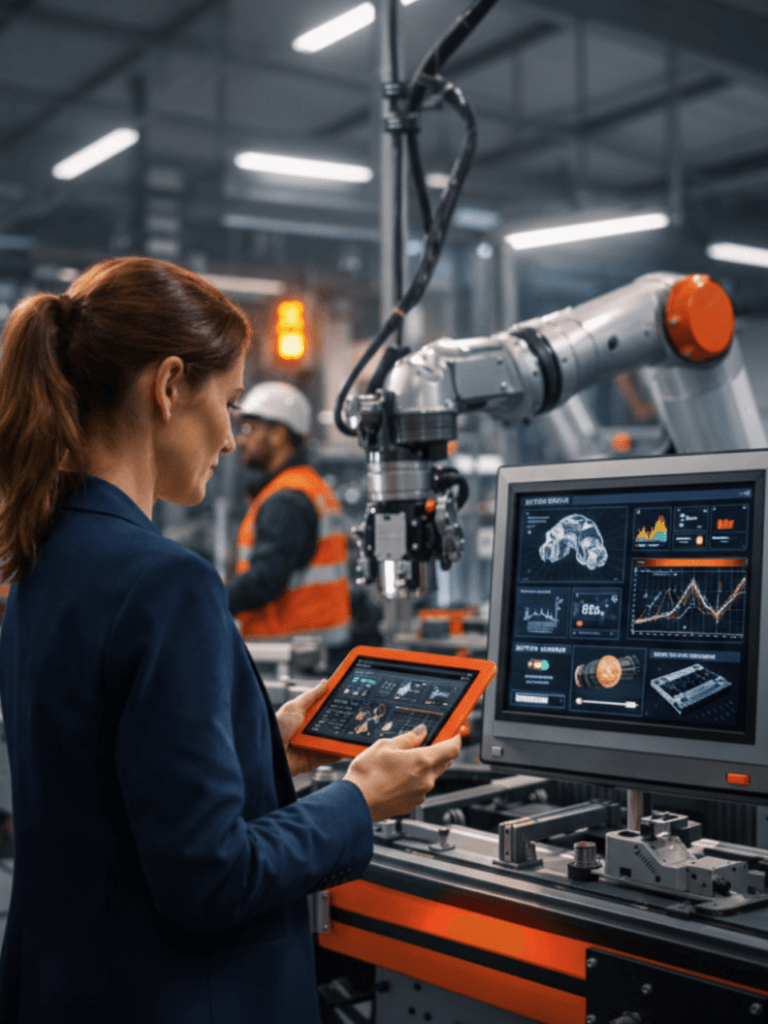
A digital twin is created using software, AI, physical sensors, data, 3D modeling, and the Internet of Things (IoT) devices to construct a digital model. The model simulates various scenarios in real-time, like a virtual tour of a real space. The global twin market is projected to grow from $49.5 billion in 2026 to $328 billion by 2033, according to Grand View Research.
What are the business benefits of a Digital Twin?
- Increases productivity and efficiency by supporting organizations in predicting how equipment, processes, and products might react to varying and standardized virtual environmental conditions, without having to go to the expense of creating a prototype
- Accelerates innovation by encouraging developers, product designers, data scientists, and engineers to collaborate and virtually experiment with the viability of products and materials before committing to expensive production
- Exposes operational inefficiencies by identifying and addressing process bottlenecks, while also monitoring and optimizing processes, and boosting productivity
- Enables the development and testing of new business models through insights into data, product usage, and performance that can be explored virtually
- Facilitates predictive maintenance and lessens downtime as the modeling can schedule maintenance, anticipate failures, and reduce or avoid unplanned disruptions
Related Articles